Türkiye Scholarships (Türkiye Bursları) 2027: Complete Guide
In 2025, Türkiye Scholarships received 125,668 applications from 171 countries, and the programme places roughly 5,000 new students a year. That works out to about 25 applications for every place, before a single interview takes place. Turkiye Scholarships 2027 is the next round, and the official process opens with a preliminary check of age, minimum marks and required documents before any committee reads your motivation. This guide gives you the exact document checklist, the real monthly stipend in lira and in dollars, the age and grade limits, and what the Turkish government scholarship means if you are applying from Africa. The 2027 call has not been announced yet, which gives you a few months to build a clean application.
Table of contents
- What Türkiye Scholarships is and why its placement model matters
- Turkiye Scholarships 2027 eligibility, benefits and dates
- The exact document checklist for the Turkiye Burslari application
- How selection works after you submit
- Turkey government scholarship Africa: what actually applies to you
- Five insider tips for your Türkiye Scholarships application
- Frequently asked questions about Turkiye Scholarships 2027
- Where to start this week
What Türkiye Scholarships is and why its placement model matters
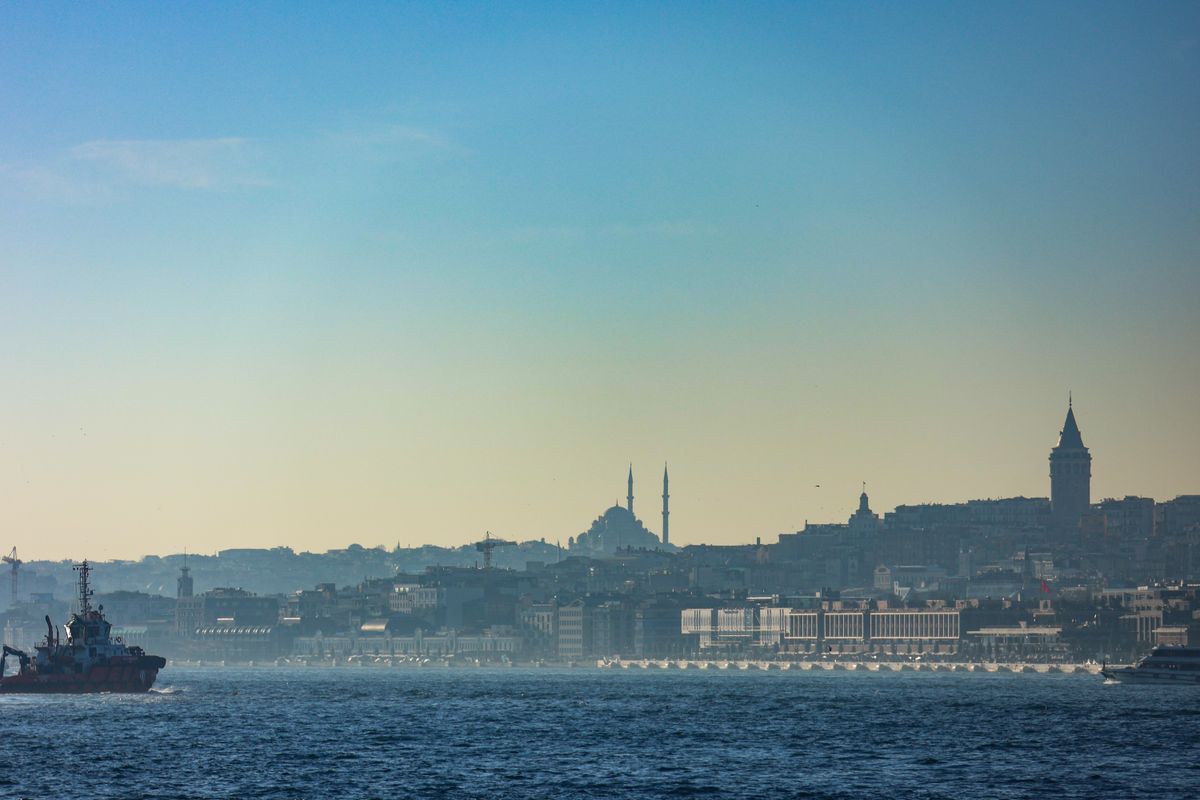
Türkiye Scholarships is run by the Presidency for Turks Abroad and Related Communities, known as YTB, a body inside the Turkish government. The programme grew out of the Great Student Project launched in 1992 and took its current name in 2012. Today more than 15,000 students from 145 countries are studying in Türkiye on it, and the alumni network has passed 150,000 members in 160 countries.
The detail most guides skip is how you apply. You never apply to a university. You submit one application through the Türkiye Scholarships Application System, known as TBBS, and rank up to 12 programme and university choices. YTB then decides where you are placed. That is why the expert committee scores the consistency of your choices, and why the list you build matters almost as much as your grades.
Two misconceptions cost applicants time. The first is that this is a scholarship for African students. The official criteria list no regional quota and open the programme to citizens of every country, so you compete with applicants from 171 of them. The second is about money. Some guides still quote lower monthly figures, for example 9,000 lira for PhD students, while the official page currently lists 6,500 lira for associate and bachelor’s students, 9,500 for master’s and 13,000 for PhD. YTB adjusts these amounts, so recheck them when the 2027 call opens.
Turkiye Scholarships 2027 eligibility, benefits and dates
Eligibility is set by level. You must be under 21 for associate and bachelor’s programmes, under 30 for master’s and under 35 for PhD. The separate Research Scholarship for academics sets its limit at 50. Minimum academic achievement is 70% for associate and bachelor’s candidates, 75% for graduate candidates and 90% for medicine, dentistry and pharmacy. You must have graduated, or be due to graduate, before August of the application year. Turkish citizens, former Turkish citizens and anyone already enrolled at the same level in a Turkish university cannot apply.
| Level | Age limit | Minimum marks | Monthly stipend | Roughly in US dollars |
|---|---|---|---|---|
| Associate and bachelor’s | Under 21 | 70% | 6,500 TL | $133 |
| Master’s | Under 30 | 75% | 9,500 TL | $195 |
| PhD | Under 35 | 75% | 13,000 TL | $266 |
The dollar column uses 48.8 lira per dollar, the rate on 19 September 2026. Those figures are modest, and the lira has lost about 18% against the dollar in twelve months. The package works because the large costs are paid directly: tuition, a one year Turkish language course, dormitory accommodation for bachelor’s students throughout, health insurance and a one time flight ticket. Master’s and PhD students get a dormitory in the first year, then a housing allowance of 6,000 lira in Istanbul and Ankara or 5,000 elsewhere. Students with strong results can move onto the Merit Scholarship, which doubles the stipend. Work out your own numbers with our study abroad budget guide.
Applications run from 10 January to 20 February every year, and the 2026 call was announced on 29 December 2025. Expect the same pattern for 2027, but treat those dates as expected until YTB confirms them. Applying is free. Other programmes keep separate calendars: the Success Scholarship takes applications in October and November, and the Research Scholarship opens four times a year. Log the window in a tracker like the one in our application tracking system guide so it cannot slip past you.
The exact document checklist for the Turkiye Burslari application
The official list of required documents has eight items, and the preliminary assessment checks them before anyone weighs your motivation. We found no published correction window, so plan as though what you upload is what gets assessed. Here is each item with the slip that most often causes trouble.
| Document | What the official list says | Where applicants slip |
|---|---|---|
| Identity document | Valid ID card or passport | Name spelled differently from the certificates. Match spelling across every file. |
| Photograph | Taken within the last 1 year | Reusing an older passport photo. Retake it if it is more than 12 months old. |
| National exam results | If any | Skipping it because it looks optional. If you have results, upload them. |
| Diploma or temporary graduation certificate | One or the other | Final year students with neither. Ask your registry early for a temporary certificate. |
| Transcript | Transcript | Uploading one year’s results. Send the full record covering every semester. |
| International exam results | GRE, GMAT, SAT and similar, if your chosen university or programme requires them | Ignoring the requirement on one of your 12 choices. Check each programme. |
| Language test results | TOEFL, DELF and similar, if required by the chosen university or programme | Assuming Turkish medium and English medium programmes ask for the same thing. |
| Research proposal and written research sample | PhD applications only | A generic topic. The sample must be research you carried out yourself. |
Before you submit, run a five minute audit. Open every file the way a stranger would and ask whether you can read each stamp, date and name. Compare your name and date of birth across all files, and confirm the grade you enter matches your transcript. Then check each of your 12 choices against the last two rows of the table, since those requirements change from one programme to the next.
Two things that are not on the official list
Recommendation letters do not appear on the checklist. The letter of intent does appear in the expert committee’s criteria, so write it as carefully as any document you upload, using our statement of purpose guide. Once the 2027 form opens, confirm whether it is a typed field or an upload.
Build the folder before the portal opens. Our document organisation system shows how to name, scan and store each file so nothing is missing on 10 January.
How selection works after you submit
The official evaluation process has five stages. The preliminary assessment checks minimum marks, age limits and required documents. The expert committee then reviews your academic record, interests, career goals, the consistency of your choices, your letter of intent and social activities. Eligible candidates go on to tests and interviews, and a selection committee compiles the final list.
Undergraduate candidates sit a 30 question test in mathematics, geometry and logic, with 60 minutes to finish. Applicants in health, science and engineering are expected to show enough English to follow the questions. In countries with very large applicant numbers, such as Afghanistan and Sudan, the Presidency may set 80 to 100 questions. The interview follows on the same day, runs 15 to 30 minutes and is held face to face by committees of academics and experts. You must bring the documents and certificates of your latest completed education.
Turkey government scholarship Africa: what actually applies to you
There is no separate African track. You use the same portal, the same criteria and the same stages as an applicant from any of the 171 countries that applied last year, so the useful question is what the general rules mean for your situation.
Start with grades. The minimum is written as a percentage, while many African transcripts show a CGPA or a degree class. Ask your registry for a statement of your grading scale, and confirm how marks are entered when the 2027 form opens. Next, age: the bachelor’s limit of under 21 rules out many first degree candidates from countries where students finish secondary school later, so check the reference date for age in the 2027 announcement. Then equivalence. YTB advises candidates to confirm that their chosen field is recognised in their home country before applying, so check that with your national education authority.
The official list does not name WAEC or NECO, but for undergraduate applicants from Nigeria and Ghana, secondary school results are where an entry under national exam results would come from. If you are comparing routes, our China Scholarship Council guide shows how another government programme handles the same choice between routes.
Five insider tips for your Türkiye Scholarships application
1. Rank your 12 choices like an argument, not a wish list
The expert committee looks at the consistency of your choices, so a list that jumps from civil engineering to international relations reads as indecision. Pick one field and vary the universities and cities around it. Put programmes that match your degree and grades first, then place reach options after them. Check the language of instruction for every choice inside the system before you commit.
2. Take the test seriously even if you are not an engineer
Undergraduate candidates sit a 30 question test, and applicants in social sciences are tested as well, with results compared inside their field. The questions follow the Turkish curriculum as well as your own, so a gap can surprise you. Work through the sample paper and answer key on the official evaluation page, and time yourself at 60 minutes.
3. Build the folder before the portal opens
The window from 10 January to 20 February is about six weeks, and there is no published way to fix a missing file afterwards. Scan each document as its own file, name it clearly and check the spelling of your name against your passport. Request a full transcript now, and a temporary graduation certificate if you finish before August. Take a fresh photograph so it falls inside the one year rule.
4. Treat language as part of the plan
Even in an English medium programme, you must attend the one year Turkish course and reach C1 by the end of that academic year unless you already hold the certificate. Programmes taught in English require an internationally accepted proficiency certificate. Decide which route you want early and book any test with time to spare.
5. Prepare for the interview as a document check plus a conversation
Interviews cover your documents, the purpose of your application, your academic knowledge and your career goals, in 15 to 30 minutes. Prepare a two sentence answer to why this field and why Türkiye, and be ready to explain the order of your choices. Bring every certificate from your latest completed education, since the committee checks them at the start.
Frequently asked questions about Turkiye Scholarships 2027
When do Turkiye Scholarships 2027 applications open and close?
YTB’s standing calendar runs applications from 10 January to 20 February each year, and the 2026 call followed that pattern after an announcement on 29 December 2025. The 2027 dates have not been published, so treat 10 January to 20 February 2027 as expected, not confirmed. Announcements appear on the official portal and YTB’s social channels. Put the window in your calendar now and finish your documents before it opens.
Is there a Turkey government scholarship for Africa, and can Nigerians apply?
Türkiye Scholarships is open to citizens of all countries, and the official criteria list no regional quota. Nigerian and other African applicants use the same portal and follow the same process as everyone else. The exclusions are Turkish citizens and anyone already enrolled at the same level in Türkiye.
Do I need recommendation letters or IELTS for Türkiye Scholarships?
The official document list does not include recommendation letters. It asks for a language test result only when your chosen university or programme requires one, and it names TOEFL and DELF as examples. Check the language of instruction for each of your 12 choices in the application system. If a programme is taught in Turkish, the scholarship’s language course covers that gap after you arrive.
Can I fix a Turkiye Burslari application after I submit it?
We found no published correction window. The official process begins with a preliminary assessment that checks age, minimum marks and required documents before the committee sees your file. Treat your submission as final and check every upload before you press submit. If you hit a specific technical problem, ask through the official contact channels instead of assuming a fix exists.
How much is the Türkiye Scholarships stipend in US dollars?
At about 48.8 lira per dollar on 19 September 2026, 6,500 lira is roughly 133 dollars, 9,500 lira about 195 dollars and 13,000 lira about 266 dollars a month. Tuition, dormitory accommodation for bachelor’s students, health insurance, the language course and a one time flight ticket are covered separately. The lira has weakened about 18% against the dollar over the past year, so check the rate before you budget.
Do I have to speak Turkish to get Türkiye Scholarships?
No, but you must reach a level. Every awardee without a C1 Turkish certificate takes a one year course at a university language centre known as TÖMER and must obtain the C1 certificate by the end of that academic year. This applies even if you are placed in an English medium programme. The scholarship pays for the course.
Our team cross checked this guide against the official Türkiye Scholarships portal, including its application steps, criteria, evaluation and benefits pages, and against YTB’s 2026 announcement, as of 19 September 2026. Exchange rates are approximate. YTB has not yet announced the 2027 dates, so treat them as expected and confirm everything on turkiyeburslari.gov.tr when the call opens.
Where to start this week
Two points are worth carrying with you. About 25 applications compete for each place, so an incomplete file is the cheapest mistake to avoid. The 2027 window is expected to open on 10 January, which leaves you time to assemble every document properly. Start with our guide to organising application documents, and if you want a second government scholarship to compare, read our MEXT scholarship guide. Bookmark this page, share it with a friend who needs it, and explore more opportunities on opportunitycrack.com. If you spend the next three months on your folder and your list of choices, you will open the portal on 10 January with nothing left to chase.