How to Avoid Plagiarism in Scholarship Essays
In 2025, plagiarism detection platforms flagged an average of 8 to 21 percent text overlap in submitted student work, and separate AI detection scans caught 10 to 25 percent of submissions containing machine generated content. Selection committees now run the same checks on scholarship, fellowship, and grant essays that universities run on coursework. If you want to avoid plagiarism in your application essay, you need to understand what these tools actually measure, because it is rarely what applicants assume.
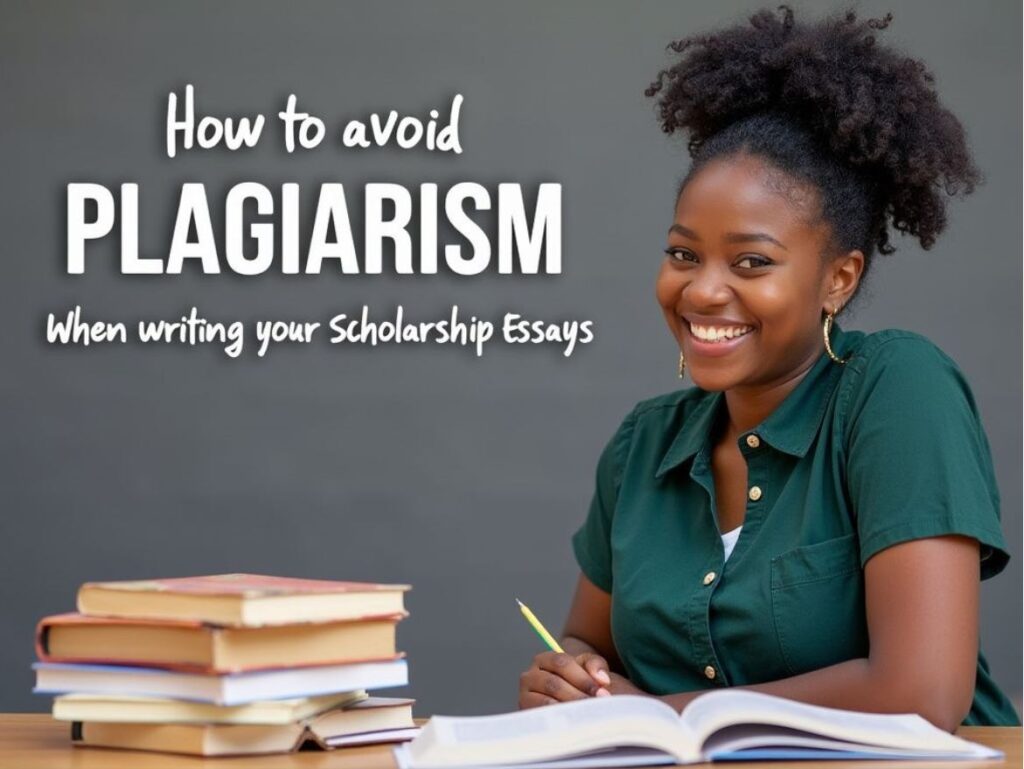
This guide breaks down how plagiarism and AI detection software works, what genuinely counts as plagiarism in an application essay, and how to write something a machine and a human reader will both recognize as yours.
Table of contents
- Why selection committees started screening essays
- How plagiarism detection tools actually work
- What counts as plagiarism in an application essay
- Turnitin vs Copyleaks vs GPTZero: how the major tools compare
- The five mistakes that get honest applicants flagged
- Five tips from past scholarship winners
- Frequently asked questions about avoiding plagiarism
Why selection committees started screening essays
Most applicants assume plagiarism checks exist to catch cheating. That is only part of the story. Scholarship providers adopted these tools largely because of volume. A single competitive scholarship can receive several thousand essays responding to nearly identical prompts, and reviewers noticed the same paragraphs, the same opening lines, and in some cases the same sentence structures appearing across unrelated submissions, usually pulled from essay sharing forums or paid writing services.
A misconception worth correcting here: a plagiarism score is not a plagiarism verdict. Turnitin and similar tools report a similarity percentage, which is simply the proportion of your submitted text that matches something already in their database. It does not distinguish between a properly quoted line, a cited statistic, a common phrase everyone uses, and a paragraph lifted from another applicant’s essay. That judgment is made by a human reviewer reading the report, not by the software itself. Committees that skip this step and reject anyone above an arbitrary percentage are, frankly, using the tool incorrectly, but you should not assume every committee understands that nuance. Write to avoid tripping the score in the first place.
Here is a detail most guides on this topic skip entirely: several large scholarship application platforms, including ones used by regional funders across Africa and by international programs that process thousands of submissions per cycle, now pool essays into a shared comparison database across partner organizations. That means your essay is not just checked against the open internet. It is checked against every other essay submitted through that same platform, including ones you sent to a different program last year. An essay that felt safe to reuse because it went to an unrelated funder can still surface as a match if both funders route through the same review system. The same forums and paid “essay bank” sites we warn about in how to identify fake scholarship websites are frequently the exact source of the template paragraphs detection software flags most often.
How plagiarism detection tools actually work
Understanding the mechanics changes how you write. Turnitin breaks your submission into overlapping word sequences, assigns each one an identifier, and checks it against a database built from web pages, academic journals, previously submitted student papers, and in many institutional deployments, essays submitted for scholarships and fellowships in prior years. If 150 words in a 1,000 word essay match something already indexed, your similarity score reads 15 percent, regardless of whether those 150 words were a properly attributed quote or a copied paragraph.
AI content detectors work differently. Tools like GPTZero and Copyleaks’s AI detector do not search a database for matches. They analyze statistical patterns in your sentence structure, word choice predictability, and rhythm, comparing them to patterns typical of large language model output versus human writing. This is why heavily edited AI drafts sometimes still get flagged, and why some honest human writing with unusually uniform sentence length occasionally gets flagged too. Neither type of tool is infallible, which is exactly why you should not treat “beating the checker” as your goal. Write something genuinely yours and the score takes care of itself.
What counts as plagiarism in an application essay
In an academic paper, plagiarism usually means uncredited use of someone else’s research or words. In a scholarship or fellowship essay, the definition expands. These four patterns account for most flagged submissions:
Using a template essay found online or shared in a forum, even after editing a few sentences. Reviewers see the same templates repeatedly, and detection software indexes them just as fast.
Reusing your own essay word for word across multiple applications without adapting it to the specific program, sometimes called self-plagiarism when the funder’s terms require an original submission for that cycle.
Paying a service or friend to write your essay, then submitting it as your own work.
Submitting AI generated text with minimal or no editing. A growing share of programs now explicitly prohibit this, and AI detection is standard on major scholarship portals as of 2026.
A fifth pattern is becoming more common and catches applicants off guard: running someone else’s essay, or your own old essay, through a paraphrasing or “spinning” tool that swaps words for synonyms while keeping the original sentence structure intact. These tools are popular precisely because applicants believe they defeat similarity checkers. In practice they often trigger AI detection instead, since the resulting sentence rhythm is mechanically uniform in a way natural rewriting rarely is. The safest version of paraphrasing is still the oldest one: read the source, close the tab, and write the idea in your own words from memory.
Core requirement to remember: your essay needs to be self-contained proof of your own voice and thinking, not just factually accurate about you.
Turnitin vs Copyleaks vs GPTZero: how the major tools compare
| Tool | Primary function | What it flags | Typical use in scholarship review |
|---|---|---|---|
| Turnitin | Text similarity matching | Overlap with indexed web pages, journals, and prior submissions | Common at universities running their own scholarship funds |
| Copyleaks | Combined plagiarism and AI detection | Text overlap plus statistical AI writing signatures | Used by third party scholarship platforms and some corporate foundations |
| GPTZero | AI content detection only | Sentence burstiness and predictability patterns typical of language models | Increasingly used as a secondary check after a low similarity score |
| Detection type | What it measures | False positive risk | What lowers your risk |
|---|---|---|---|
| Similarity matching | Word for word or near identical text overlap | Low, matches are usually real overlaps | Paraphrase in your own structure, cite anything quoted |
| AI pattern detection | Statistical writing patterns typical of language models | Moderate, uniform human writing can trigger flags | Vary sentence length, include specific personal detail a model would not generate |
The five mistakes that get honest applicants flagged
These are not cases of applicants trying to cheat. They are common habits that raise a similarity or AI score by accident, based on patterns reviewers report seeing repeatedly.
Copying your own “About Me” paragraph from a previous application word for word. Once that paragraph is indexed by a platform that shares data across scholarship cycles, it will match every time you reuse it.
Leaning on a chatbot to “polish” your draft sentence by sentence. Editing individual sentences with AI still leaves the statistical fingerprint AI detectors look for, even if you personally wrote the original ideas.
Quoting a mission statement or program description directly from the scholarship’s own website without quotation marks, assuming it does not count since it is the funder’s own language. It still registers as a match.
Using widely circulated “power phrases” from essay coaching blogs, like specific opening hooks that get recommended in dozens of guides. These phrases are indexed precisely because they are recommended so often.
Submitting a near identical essay to five different scholarships in the same cycle with only the program name swapped. Several major scholarship platforms now share a common Turnitin repository, so cross submission matches are increasingly visible to reviewers. This sits alongside the broader pattern we cover in 10 scholarship mistakes that quietly cost you the award, where reused, unadapted material shows up as one of the most common and avoidable rejection reasons.
Downloadable resource
Before you draft, work through our scholarship essay writing guide, which breaks down structure and includes a usable outline, so you are building around your own experience rather than a generic five paragraph format that shows up in thousands of other submissions. Pair it with our CV guide for scholarships and international jobs so your supporting documents are consistent with the personal narrative in your essay rather than contradicting it.
Five tips from past scholarship winners
Draft without looking at sample essays first. Applicants who read five “winning essay” examples before writing their own tend to unconsciously mirror the structure and phrasing of those samples. Write your first draft from memory of your own experience, then read samples afterward only to check tone.
Anchor every paragraph to one specific, undocumented detail about your life. A generic claim like “I have always been passionate about engineering” appears in thousands of essays and reads as filler to both a reviewer and a similarity checker. A sentence like “I rewired my grandmother’s radio at age eleven because the repair shop quote cost more than her monthly pension” cannot be matched to anything else because no other applicant lived it.
Read your essay aloud before submitting. Passages generated or heavily assisted by AI tend to sound smooth but slightly flat when read aloud, missing the small imperfections and rhythm shifts of natural speech. If a paragraph sounds like a press release, rewrite it in your own speaking voice.
Keep a version history of your drafts. If a program ever questions your submission, having dated drafts showing your essay evolving from a rough outline to a final version is the fastest way to demonstrate the work is genuinely yours.
Never submit the exact same essay to two programs with a shared review platform without checking their terms first. Some multi-scholarship platforms explicitly state that identical submissions across their partner programs will be flagged, even if both applications are honest and permitted individually.
Frequently asked questions about avoiding plagiarism
Can I reuse parts of an old scholarship essay for a new application? You can reuse ideas and personal stories, but rewrite the actual sentences for each application. Most funders permit recycled themes but not word for word reuse, and detection software will match identical paragraphs even across different scholarship cycles.
Will quoting the scholarship’s mission statement get me flagged for plagiarism? Yes, if you quote it without quotation marks and attribution, even briefly. Put it in quotes and mention where it comes from, or better, paraphrase it in your own words and explain why it resonates with you specifically.
Does using Grammarly or a spell checker count as plagiarism or AI use? No. Grammar and spelling tools that correct your existing sentences without generating new content are not flagged by AI detectors, which look for statistical patterns of machine generated text, not corrected typos.
How do I avoid plagiarism if I want to reference statistics or research in my essay? Cite the source in plain language within the sentence, such as naming the organization or study, and put any directly copied phrasing in quotation marks. Paraphrased statistics still need attribution even without quotation marks.
Can a low similarity score still get rejected for being AI written? Yes. Similarity matching and AI detection are separate systems. An essay can score near zero on Turnitin because the words are technically original while still reading as AI generated in tone and structure, which a secondary AI detector can catch independently.
What should I do if I am wrongly flagged for plagiarism? Most programs have an appeals or clarification process. Respond promptly with your draft history, mention any properly cited material the checker may have misread as unattributed, and request a human review of the specific matched sections rather than the overall percentage.
Our team cross checked the detection mechanics described in this guide against Turnitin’s own similarity report documentation and published 2025 to 2026 academic integrity data as of this writing, rather than relying on secondhand summaries of how these tools work.
The essay most likely to survive a plagiarism and AI check is simply the one that is actually yours: specific, personally sourced, and drafted in your own words from the start rather than cleaned up after the fact. Build your draft around a single detail only you could write, cite anything you borrow, and read it aloud before you submit.
If you are also working on your statement of purpose for the same application cycle, our statement of purpose guide covers the same authenticity standards reviewers apply to essays. Bookmark this page, share it with a friend working on their own application, and explore more opportunities on opportunitycrack.com.
You already have a story no algorithm can generate. Write that one.